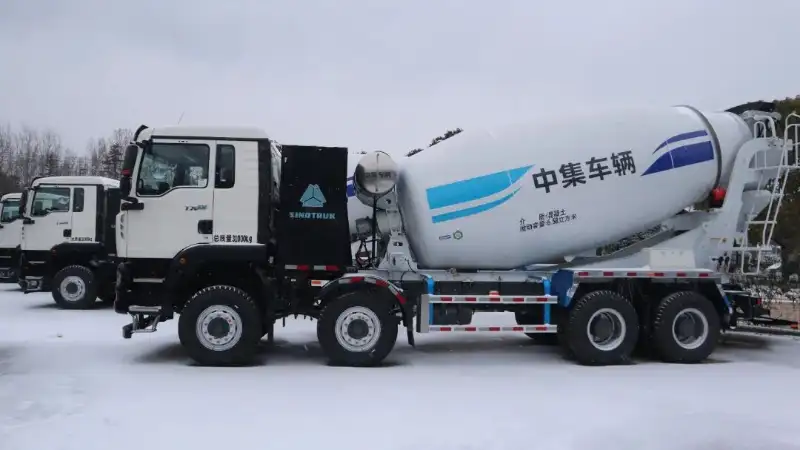
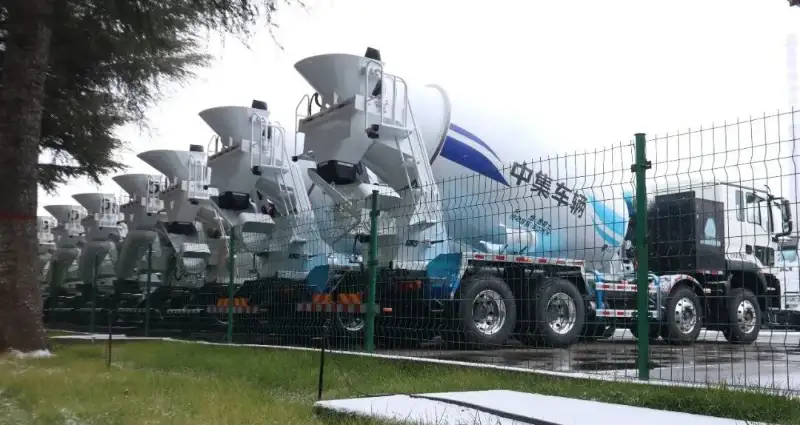
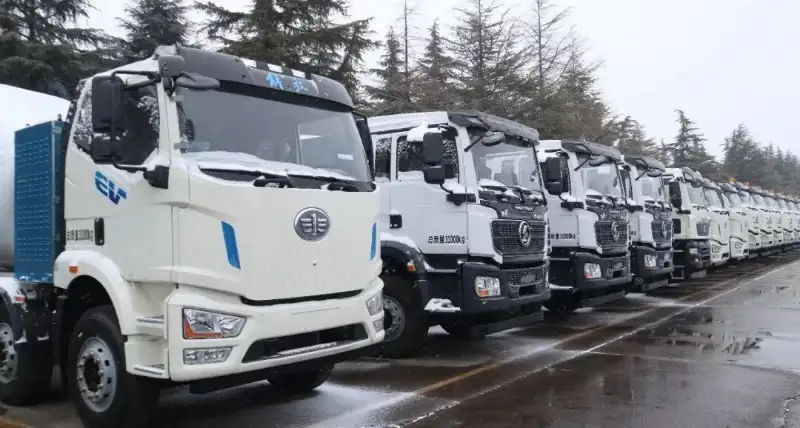
Overnight, the landscape was blanketed in snow. Many parts of the country switched to "ice and snow mode" with a single click. Some people enjoyed the snow on social media, while others monitored their vehicles in engineering groups. For engineers, no matter how beautiful the scenery, nothing beats one thing—the vehicle must not break down.
Especially for new energy concrete mixer trucks, these "powerhouses," their stability, range, and fuel efficiency in winter directly determine their uptime and costs. So the question is: how can we ensure stable, long-lasting, and economical operation during the cold, snowy season, minimizing unnecessary expenses? Today, let's talk about how to ensure new energy concrete mixer trucks can safely get through the winter.
Battery System: Preheating, Insulation, and Frequent Shallow Charging
Be sure to preheat the battery before charging. Low temperatures significantly reduce battery activity, and direct charging can easily result in "false charging," which may damage the cells in the long run. After parking in snowy weather, charge the battery within 30 minutes to utilize the residual heat for higher efficiency and less energy loss. Don't let the battery level drop completely; recharge it when it falls below 30%. In low temperatures, a depleted battery is more prone to sudden power loss.
It is recommended to use a shallow charging and frequent charging mode, and never leave the battery low overnight. The charging environment should be dry, and cables should be regularly checked for damage or oxidation to avoid potential hazards.
Tank Maintenance: Prevent Freezing in Snowy Weather
After each day's work, the tank must be thoroughly cleaned: use coarse stones and clean water to rinse away all residual cement slurry and stones. After rinsing, be sure to drain all water from the tank. Even a little water left can freeze overnight, potentially sealing the blades and making starting difficult the next day.
Additionally, winter work loads are high: regularly check the wear of the tank blades, check for material buildup in gaps, and inspect seals for aging or cracking. Rubber parts harden more easily at low temperatures.
Safety Bottom Line: Brakes, Tires + Details
After snowfall, clean snow and rust from brake discs and pads. Replace brake pads immediately if they are found to be too thin.
Low temperatures can cause tire pressure to drop; in snowy weather, tire pressure should be regularly increased to prevent excessive wear due to low pressure. Check the tread depth; replace tires immediately if it is below 1.6mm. Before each trip, clear stones and snow from the tire treads.
Regular windshield washer fluid freezes easily in sub-zero temperatures, potentially cracking the reservoir. Always replace with antifreeze. Also, check the antifreeze level and freezing point to ensure it meets local minimum temperature requirements, preventing damage to the motor cooling system from freezing.
When driving on icy roads, activate the anti-lock braking system (ABS/ASR). When driving on steep slopes or gravel roads, temporarily disable the ASR switch to prevent slippage.
Parking Tips: Proper Car Storage in Snowy Weather
A good overnight parking ensures better driving performance the next day. Park on flat surfaces whenever possible to avoid prolonged pressure on the parking brake, which can cause it to freeze. If possible, park indoors to maintain a battery temperature above 5°C, effectively reducing range degradation.
If the vehicle is idle for more than 7 days, keep the battery charge between 50% and 70%. For extended periods of inactivity, disconnect the negative terminal of the low-voltage battery to prevent static discharge.
Special Reminder | Emergency Tips for Snowy Weather
1. Start smoothly in snowy weather: Avoid sudden acceleration. Drive at low speed for 5-10 minutes to warm up the battery and vehicle before accelerating normally.
2. Tips for using the heater: Prioritize using the seat heaters instead of the high-powered heater. This can reduce heating energy consumption by 40% and prevent excessive range depletion. Set the temperature to 22-25℃, and turn on the internal circulation and footwell vents for both warmth and energy saving.
3. Don't attempt repairs yourself if there are malfunctions: If the battery overheats abnormally or the range suddenly drops significantly, do not attempt to disassemble it yourself. Contact the brand's after-sales service immediately. Allow sufficient time for roadside assistance in snowy weather.