Following the Spring Festival, the heavy-duty truck market is quietly undergoing changes. On one hand, sales saw a temporary decline in February; on the other hand, demand from logistics, construction, and overseas markets is gradually recovering. For the entire industry, the real market rhythm often begins just after the Spring Festival off-season.
February Market "Brief Correction" Due to Spring Festival Factors
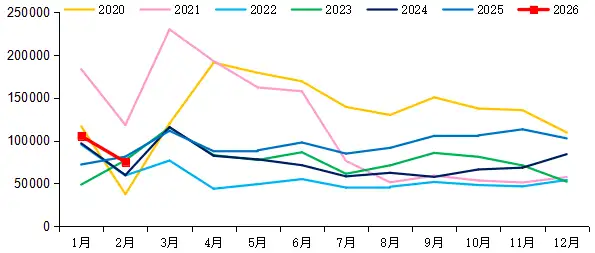
Data from First Commercial Vehicle Network shows that my country's heavy-duty truck sales in February 2026 were approximately 75,000 units. This represents a nearly 30% decrease compared to January 2026 and a decline of about 8% compared to the 81,400 units sold in the same period last year. However, looking at the overall trend for the year, this change is largely due to seasonal fluctuations caused by the Spring Festival.
From an industry perspective, the month containing the Spring Festival is typically the traditional off-season for the heavy-duty truck market. During the Spring Festival, a large number of truck drivers return home for the holidays, leading to a temporary halt in freight operations. Simultaneously, vehicle manufacturers, parts suppliers, and dealerships also arrange concentrated holidays, significantly slowing down production and delivery.
Overall data shows that the market still maintains its growth momentum. Data shows that in the first two months of 2026, my country's cumulative sales of heavy-duty trucks exceeded 180,000 units, a year-on-year increase of approximately 17%, indicating a continued strong recovery in the industry. This also means that the current market is more about a change in pace than a decrease in demand.
End-user demand is recovering; infrastructure construction is resuming, and the market is gradually warming up
Construction Vehicle Sector
With the arrival of March, the transportation industry's capacity demand is rebounding, vehicle uptime is increasing, and vehicle purchase demand will gradually recover. Especially in sub-sectors such as coal transportation, resource transportation, and regional logistics, there is still demand for vehicle replacement and new additions. At the same time, sub-markets such as new energy heavy-duty trucks are also entering a new phase of adjustment and growth.
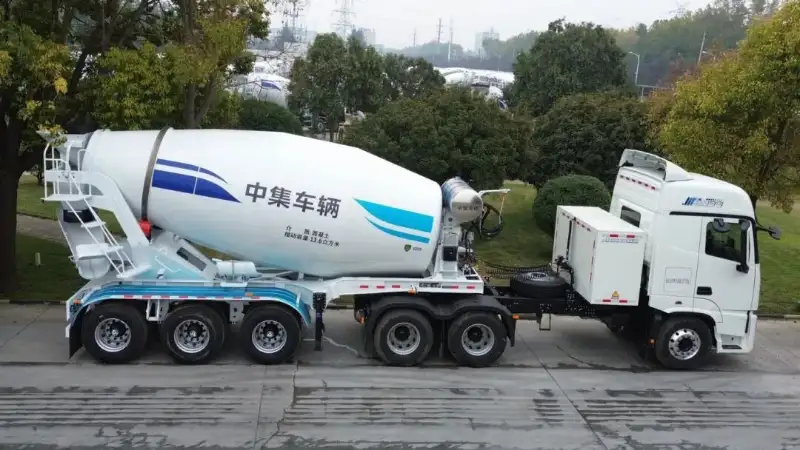
Infrastructure construction, municipal engineering, and industrial park projects across the country will gradually resume. With the commencement of projects, the demand for concrete transportation is increasing, bringing new activity to the mixer truck market. At many construction sites, the demand for vehicle and equipment replacement is gradually emerging. Compared to the past, current construction vehicle users are paying more attention to several key factors when purchasing vehicles: vehicle reliability and uptime, power performance and adaptability to complex working conditions, and the improved operational efficiency brought about by vehicle lightweighting.
Under this trend, lightweight structural design, improved durability, and the application of new energy technologies have become key selection criteria for users.
Overseas Markets
In addition to the gradual recovery of the domestic market, the growth in overseas demand is also a significant support for the heavy-duty truck industry. Data shows that in February 2026, China's heavy-duty truck exports continued to grow, with a year-on-year increase of over 20%. With the continued advancement of infrastructure construction along the "Belt and Road" initiative, the competitiveness of Chinese commercial vehicles in overseas markets is constantly strengthening. Engineering transportation equipment, including dump trucks and mixer trucks, is also accelerating its entry into overseas engineering construction projects.
Peak Season Approaching, Heavy-Duty Truck Industry Confidence Gradually Recovering
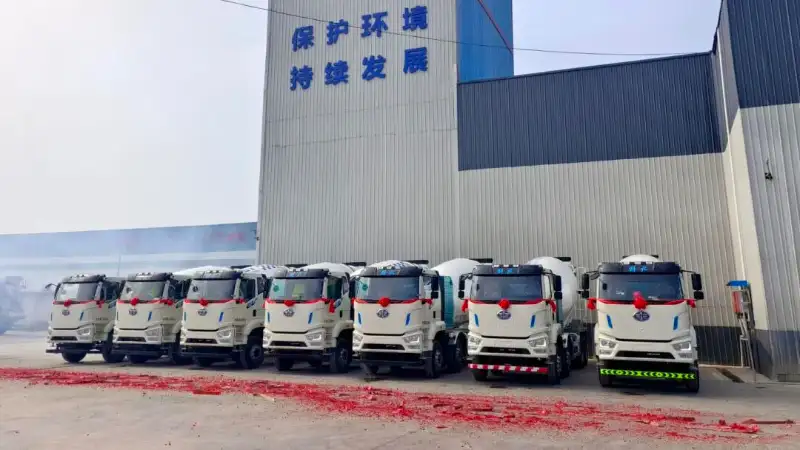
Entering March, the traditional peak sales season for the heavy-duty truck industry has gradually begun. On the one hand, major vehicle manufacturers are striving to achieve their first-quarter sales targets; on the other hand, the recovery of logistics demand, the resumption of engineering projects, and potential policy benefits will all bring new growth momentum to the market. Looking at the overall trend for the year, with the continued recovery of domestic economic activity and the growth in overseas market demand, the heavy-duty truck industry in 2026 remains full of opportunities.
In the field of engineering transportation equipment, with the advancement of infrastructure investment and the increase in construction projects, the market for special-purpose vehicles such as concrete mixer trucks is expected to usher in a new demand cycle. For companies in the industry, those who can continuously strengthen their efforts in product technology, reliability, and market layout will have a greater chance of gaining the initiative in this round of market recovery.
