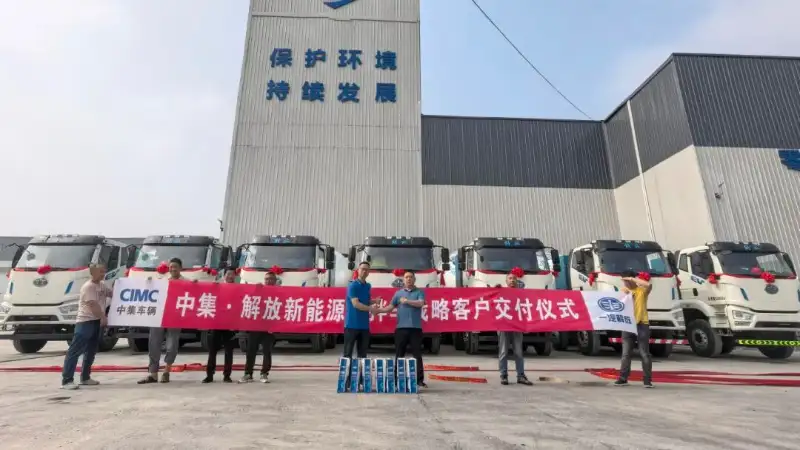
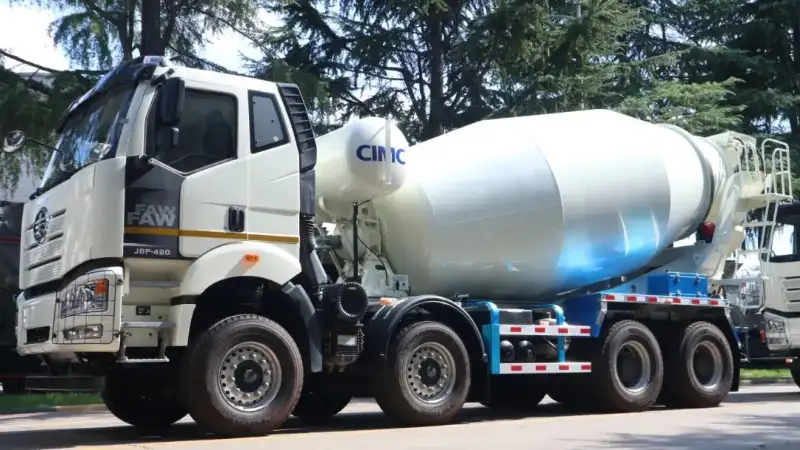
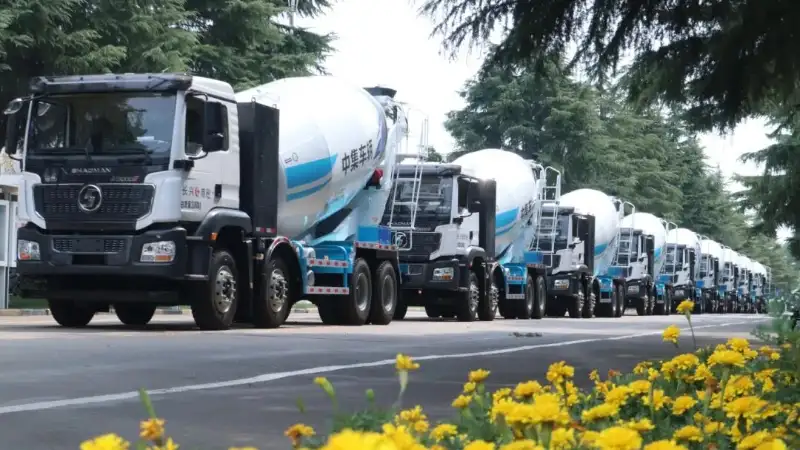
Following March's sales approaching 140,000 units, the heavy-duty truck industry maintained its strong performance in April. Driven by the traditional peak season, replacement demand, and exports, the heavy-duty truck market continued its high growth, with natural gas-powered and electric heavy-duty trucks showing distinctly different trends.
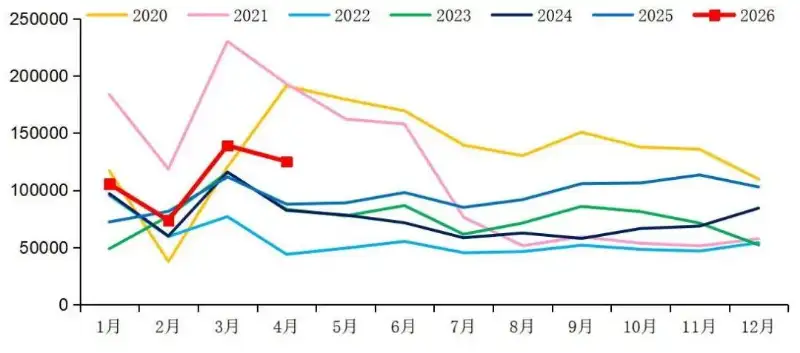
Monthly sales trend of my country's heavy truck market, 2020-2026 (unit: vehicles)
◆ Industry Maintains High Growth, Year-on-Year Surge Hits Five-Year High
In April 2026, the heavy-duty truck market continued its peak season growth trend, with sales exceeding expectations once again. According to data from First Commercial Vehicle Network, wholesale sales of heavy-duty trucks in my country reached approximately 125,000 units in April (wholesale figures, including exports and new energy vehicles), a slight decrease of about 10% compared to March, but a significant increase of 43% compared to 88,000 units in the same period last year, setting a new historical high for April sales in nearly five years.
From January to April, the industry's cumulative sales reached 443,000 units, a year-on-year increase of 26%, solidifying the growth momentum in the first half of the year.
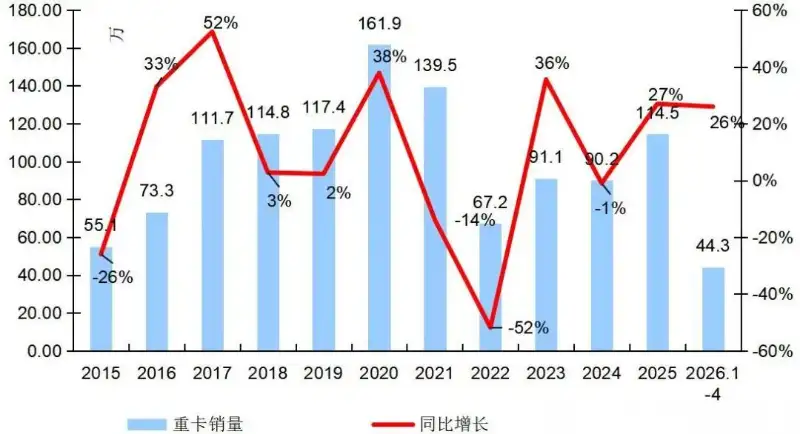
Annual sales trend of my country's heavy truck industry, 2015-2026 (unit: 10,000 vehicles)
The market maintained strong growth in April, driven by three main factors:
Traditional peak season coupled with accelerated replacement: March to mid-May is traditionally the peak sales season for heavy-duty trucks. Entering the second quarter, the national logistics and transportation industry fully resumed operations, significantly increasing demand from logistics companies and individual vehicle owners for new vehicles that are more efficient, reliable, and have higher uptime, fully demonstrating the peak season effect.
From March to April this year, the replacement rate of National V diesel heavy-duty trucks accelerated significantly due to the dual replacement by gas-powered and electric heavy-duty trucks, resulting in strong overall demand. Against the backdrop of a generally positive industry environment, automakers increased their promotional efforts, leading to a simultaneous increase in orders and wholesale volume.
Oil-gas price differential driving structural changes: Domestic oil prices remained high in April. Although there was a price reduction on April 22, the national price of No. 0 diesel remained above 8 yuan/liter. Meanwhile, LNG prices were relatively stable in the early stages, and the oil-gas price differential remained significant until late April, directly driving the continued popularity of natural gas heavy-duty trucks.
However, it's worth noting that since late April, LNG prices have rapidly climbed to over 6 yuan/kg, significantly narrowing the oil-gas price gap. The operating cost advantage of LNG heavy-duty trucks has essentially disappeared in many regions, a change that will put significant pressure on the market performance of natural gas heavy-duty trucks in late April and May.
Export demand remains strong: Strong infrastructure and mining demand in Asia, Africa, and Latin America led to a year-on-year increase of over 35% in heavy-duty truck exports in April, becoming a stable source of growth for the industry.
◆ Natural gas vehicles show strength followed by weakness, while new energy heavy-duty trucks continue to accelerate.
The natural gas heavy-duty truck market experienced a significant fluctuation, rising initially and then falling.
Natural gas heavy-duty trucks maintained high demand, with terminal sales in April nearly doubling year-on-year and showing a slight increase month-on-month. Market penetration exceeded 37%, continuing to lead the segment. However, the rapid rise in gas prices to over 6 yuan/kg in late April, approaching diesel prices in some regions, significantly weakened the cost advantage of LNG heavy-duty trucks, directly impacting the demand trend for natural gas vehicles in May.
New Energy Heavy-Duty Truck Policies Drive Further Penetration
Driven by sustained demand during the peak season and persistently high diesel and natural gas prices, sales of new energy heavy-duty trucks surged in April. Although overall sales volume remains lower than that of natural gas heavy-duty trucks, the month-on-month growth rate accelerated, showing significantly stronger momentum than in March. In April 2026, terminal sales of new energy heavy-duty trucks increased by over 25% month-on-month and over 60% year-on-year, with market penetration reaching approximately 30%, becoming a key engine for industry growth.
The deepening application of new energy technologies in engineering transportation scenarios is also bringing new growth opportunities to the special-purpose vehicle market. Especially in short-haul transportation, urban delivery, and fixed-route scenarios, the acceptance of new energy special-purpose vehicles continues to increase.
On April 28th, the Ministry of Transport and the National Development and Reform Commission jointly issued the 2026 policy for the scrapping and replacement of old operating freight vehicles, explicitly supporting the elimination and replacement of National III and National IV diesel and natural gas freight vehicles, accelerating the replacement of low-emission, high-standard models, and prioritizing the replacement with electric freight vehicles. The policy will implement differentiated subsidies based on vehicle type, scrapping time, and new power type, further stimulating replacement demand.
◆ Policy support is in place, and the market will continue to be strong in May
The strong performance of the heavy truck market in April is just one part of the industry's upward cycle. With the implementation of the National III and National IV emission standard replacement policies in various regions, coupled with the continuation of the traditional peak season, increased subsidies for electric heavy trucks, and continued export resilience, multiple positive factors are combined, and the heavy truck market is expected to continue its upward trend in the second quarter.