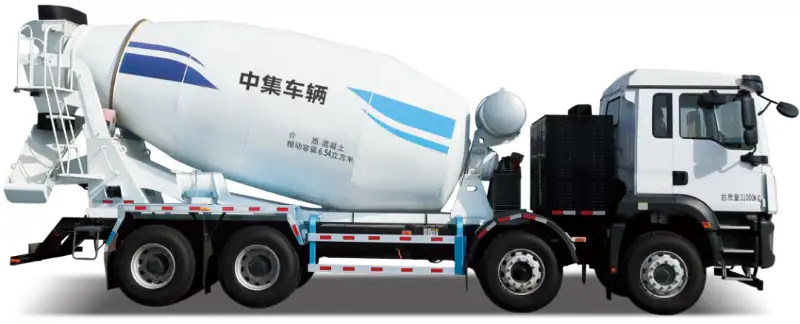
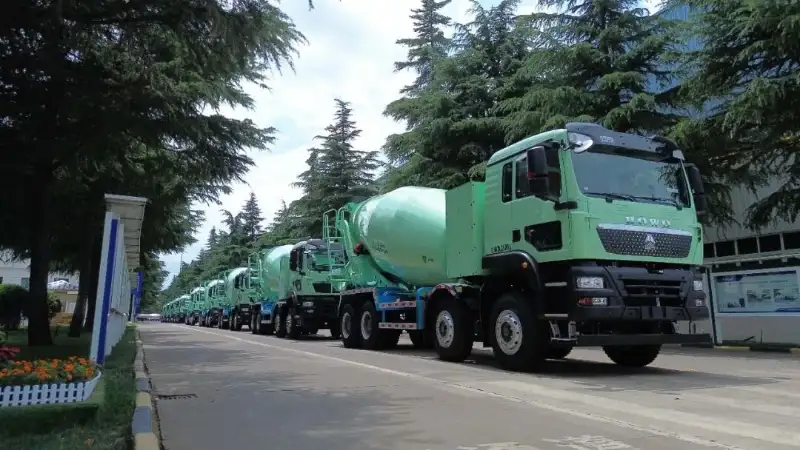
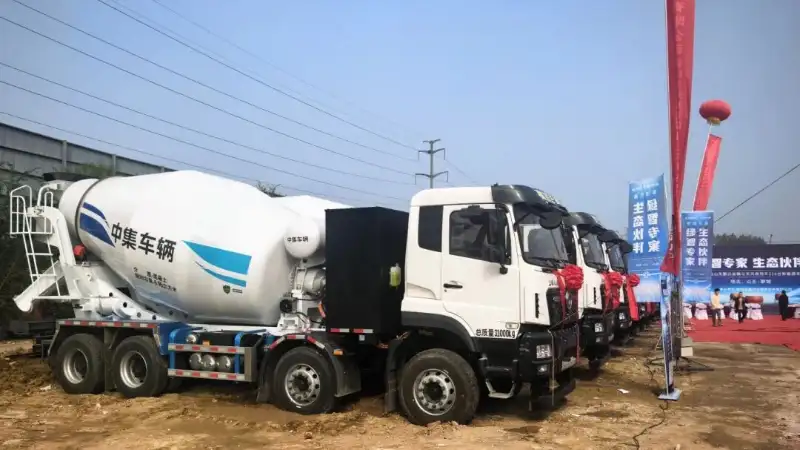
Since 2026, the new energy heavy-duty truck market has seen a series of favorable policies. From the national government's continued promotion of the scrapping and replacement of old commercial trucks, to local governments issuing special subsidies for new energy medium and heavy-duty trucks, and the accelerated deployment of charging and battery swapping infrastructure, a policy system covering "scrapping and replacement—purchase subsidies—operational support" is rapidly taking shape.
National policies continue to expand, and the "trade-in" program is further strengthened
On April 28, the Ministry of Transport and the National Development and Reform Commission jointly issued the 2026 policy on the scrapping and replacement of old commercial trucks. Compared with previous policies, this officially includes diesel trucks meeting the National IV emission standard and below in the subsidy scope.
The policy clearly prioritizes supporting the replacement of old trucks with pure electric commercial trucks. The subsidy amount for new energy vehicles is significantly higher than that for National VI fuel vehicles. Medium-sized new energy trucks receive a subsidy of 35,000 yuan per vehicle, and heavy-duty new energy trucks receive subsidies ranging from 70,000 to 95,000 yuan per vehicle depending on the number of axles. Among them, new energy heavy-duty trucks with 4 axles or more receive a maximum subsidy of 95,000 yuan. If combined with scrapping subsidies: the maximum scrapping subsidy is 45,000 yuan, and the maximum subsidy for newly purchased new energy vehicles is 95,000 yuan, with a maximum cumulative subsidy of 140,000 yuan per vehicle. For users of new energy heavy-duty trucks, this significantly reduces vehicle replacement costs.
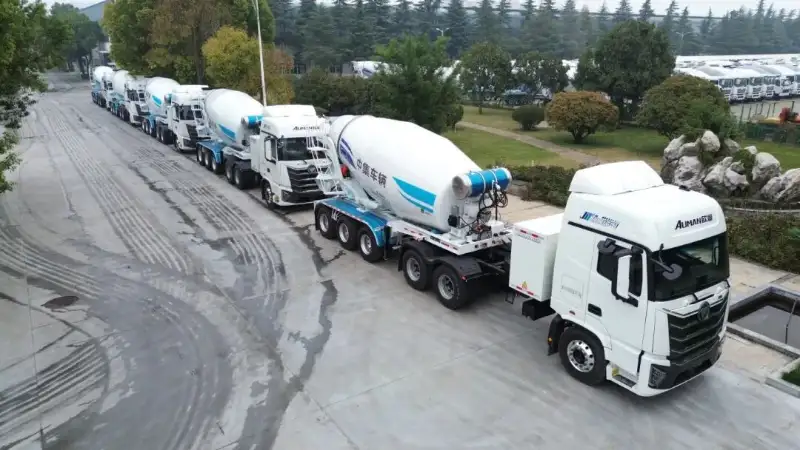
This round of policy funding is supported by ultra-long-term special treasury bonds. This means stronger policy continuity, more stable expected returns, and a foundation for local governments to introduce supporting policies. From a policy mechanism perspective, the promotion of new energy heavy-duty trucks has gradually shifted from short-term stimulus to long-term institutional support.
Local policies are being implemented intensively, with multiple provinces and cities simultaneously increasing their efforts
Based on national policies, various regions are introducing local support policies in quick succession, taking into account their own industrial structures and emission reduction targets. Recently, Zhejiang Province released the "Implementation Rules for Subsidies for New Energy Medium and Heavy-Duty Operating Freight Trucks (Draft for Comments)," establishing a special subsidy for "newly purchased new energy operating freight trucks" for the first time, building upon the national "trade-in" policy, using substantial financial support to promote the upgrading of freight vehicles, with subsidy levels leading the country.
Hangzhou recently released the "Three-Year Action Plan for Eliminating and Replacing Old Diesel Trucks to Promote Pollution Reduction and Carbon Reduction Reform (2026-2028)." The policy adopts a dual-drive model of "subsidies and incentives + traffic restrictions" to further accelerate the pace of new energy vehicle replacement. The plan emphasizes that concrete mixer trucks should take the lead in achieving breakthroughs, requiring that "by 2028, efforts should be made to eliminate and replace 50% of old medium and heavy-duty trucks within the city's ring road, and key industrial and mining enterprises should fully meet clean transportation requirements."
Shandong released an implementation plan for the large-scale application of electric heavy-duty trucks, offering subsidies of up to 140,000 yuan for scrapping and replacing electric heavy-duty trucks, and simultaneously introducing policies such as 1-1.5 percentage point interest subsidies for vehicle purchase loans, zero down payment financial support, and reduced charging costs.
Henan's provincial subsidies are aligned with national standards, with scrapping subsidies ranging from 10,000 to 45,000 yuan and new purchase subsidies ranging from 25,000 to 95,000 yuan for new energy trucks. Zhoukou, Luohe, and other cities have introduced special reward and subsidy programs for new energy concrete mixer trucks.
Furthermore, provinces such as Hebei, Tianjin, Guangdong, Anhui, and Jiangsu have all included the replacement of old trucks in their large-scale equipment upgrade funding support. Xinjiang and Inner Mongolia have simultaneously launched subsidies and charging/swapping programs, forming a policy pattern of "multi-point development and comprehensive promotion" nationwide.
Supporting Guidance Ensures Worry-Free Replacement
In addition to direct subsidies, traffic management and the construction of energy replenishment networks have become important supporting measures for promoting the electrification of heavy-duty trucks:
Taking Hangzhou as an example, starting in 2027, National IV diesel trucks will be restricted in urban areas, and in 2028, they will be restricted throughout the entire city; National V diesel trucks will be restricted in stages simultaneously. New energy heavy-duty trucks can enjoy exemptions from these restrictions and priority processing of permits, ensuring their eligibility to operate in urban areas. In Hangzhou's Linping District, since March 2026, all construction sites have been using pure electric mixer trucks, marking the mandatory implementation of electrification in engineering transportation.
Subsidies are Just the Beginning; Operating Costs Become a Key Consideration
Many customers focus on policies, and their first reaction is often "how much subsidy?" However, from an operational perspective, what truly deserves attention is not the one-time subsidy, but the changes in costs throughout the entire life cycle. Traditional fuel-powered concrete mixer trucks have long faced a triple pressure: frequent fluctuations in international oil prices, with diesel prices remaining high for an extended period, directly impacting the operating profit per vehicle; increasingly stringent emission regulations, with annual inspections, environmental testing, and traffic restrictions constantly escalating, leading to a year-on-year increase in the hidden costs of aging vehicles; and rising failure rates of core components such as engines, after-treatment systems, and transmissions as vehicles age, resulting in continuously increasing maintenance expenses.
In contrast, the economic advantages of new energy concrete mixer trucks are gradually becoming apparent. In fixed-route, high-frequency, short-turn transportation scenarios, the energy consumption cost of electric vehicles is significantly lower than that of diesel vehicles; at the same time, the electric drive system has a simpler structure, reducing maintenance items. For ready-mixed concrete companies, the savings per truck per year may seem limited, but as the fleet size expands, the cost difference will rapidly amplify.
From Encouragement to Widespread Adoption: Policy Clarity
From the national to the local level, a series of policies have released a clear signal: the promotion of new energy heavy-duty trucks has moved from "encouraging development" to "accelerated popularization." On the one hand, subsidy policies effectively reduce purchase costs; on the other hand, traffic restrictions and environmental governance measures are accelerating the retirement of older vehicles.
For concrete mixer truck users, the current period presents both a window of opportunity for policy benefits and equipment upgrades. This round of policies not only affects purchase costs but also future operational efficiency, traffic capacity, and project access conditions.
Policy windows are often time-sensitive. Early understanding of policies and early planning of upgrade schedules are crucial to better capitalizing on policy benefits and reducing operational upgrade costs. In today's rapidly transforming industry, equipment upgrades are no longer just a purchasing decision but a strategic business plan for the future!